Unlocking the Value of AI for Your Business Series: Ep 2 - Key Considerations of AI

The rise of AI!!

With the rise of AI, more people and businesses are either adopting or are looking to adopt AI solutions to make tasks more efficient or just make their daily lives easier. There are several things that need to be considered when using AI, such as the tools to use and how to use them in the most efficient way.
With the growing use of AI and the variety of industries that are adopting AI, questions on the ethical implications of how AI is utilised have moved into the spotlight.
Initially, it is important to understand the AI tool/ model that you are using and understand the purpose it was built for and what data it was built on.
When many people think of AI, they think of Copilot, ChatGPT etc and think of these as one stop shop for AI, when in reality they are a very specific part of AI called Large Language Models (LLMs), which are built from massive amounts of text to help understand the relationships between tokens, these can be words, grammar or characters to predict the correct response. But this is not everything AI has to offer. There are lots of models, all built on a variety of data and for vastly different purposes.
Ethical Considerations

Understanding this as a principle is important when using AI because the datasets that have been used to train the model can have inherent bias and, as such, provide biased or unfair responses. This is widely seen when looking at algorithms that are used to show content on social media, where the content you engage with impacts the content you are shown. This can be the same with LLMs, if built with biased data, it will provide biased responses. As such, being conscious of the source of the data and what the model has access to.
As people are using AI or their daily lives are impacted by it, there is a scepticism or mistrust of how AI has been used or what it’s being used for. As such, there is a growing desire for transparency and explainability of models and how decisions have been made, especially in regulated industries that are kept accountable for decisions not only by customers but also by their regulators. As such, the ability to explain how models have been used and what data they have used is increasingly more important when utilising AI. (Tune in to episode 3 for a deep dive on this)
Data Privacy and Security

AI models are trained using massive amounts of data, and the rules and standards for data storage and usage don’t change just because you're using AI. Basing an answer on poor information leads to poor results, where the lines get blurred for AI in data ownership, especially when using GenAI. A lot of GenAI models will access the internet to source information or content that is used to generate a response or content. This can cause complications when either a model “hallucinates” and makes up a response that isn’t true. ALWAYS REQUEST REFERENCES so you can fact check anything the model responds with or instruct it to reply with “I don’t know”. Additionally, we’ve all seen images generated with watermarks in them. This is because AI models are not artists, they utilise millions of images to generate a new one. These have got better as AI has developed, but it is important to know how it's created.
Technical Considerations

Now we get to the fun stuff. Everyone wants to use AI, but many are unsure where to start or what is possible. It’s important to understand what AI can be used for, and if you haven’t had a chance to read Episode 1 yet, please check it out, as it covers the basics of AI and its potential use cases. But some important considerations is do you have the data and resources needed to build your own models, whether you partner with external suppliers for agents, what data they used to train the models, whether you can use the agent in combination with your data, or do you need to make changes internally before diving into AI.
How we interact with AI
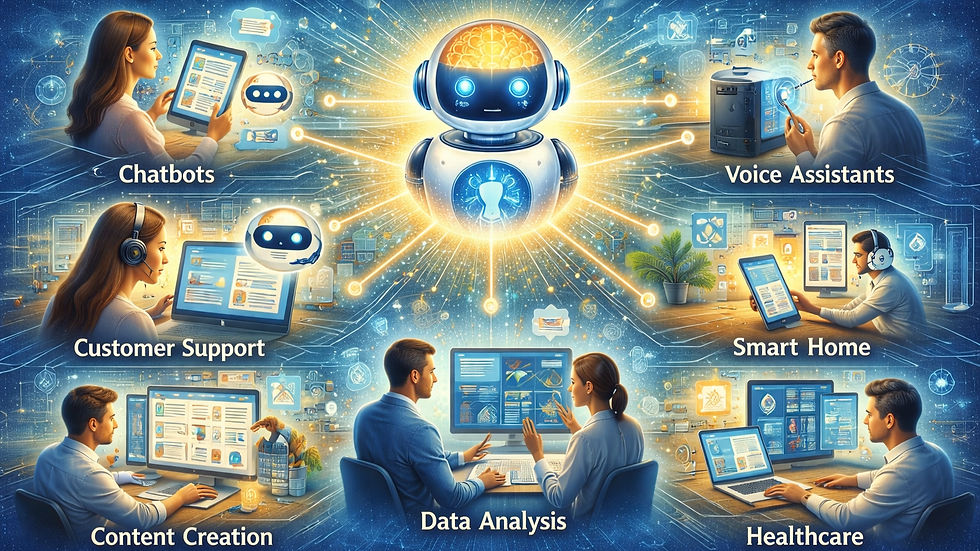
What many are asking or are afraid of is whether AI is going to replace us. It’s my belief that we are a long way off AI being able to do everything that people do, so don’t worry yet, you only need to look at how Alexa, Siri and Google Home respond to questions to understand they aren’t all singing and dancing yet. Most models are built to complete a specialist task, and the term for an AI that can complete multiple different types of tasks is an Artificial General Intelligence. We are still many years from that.
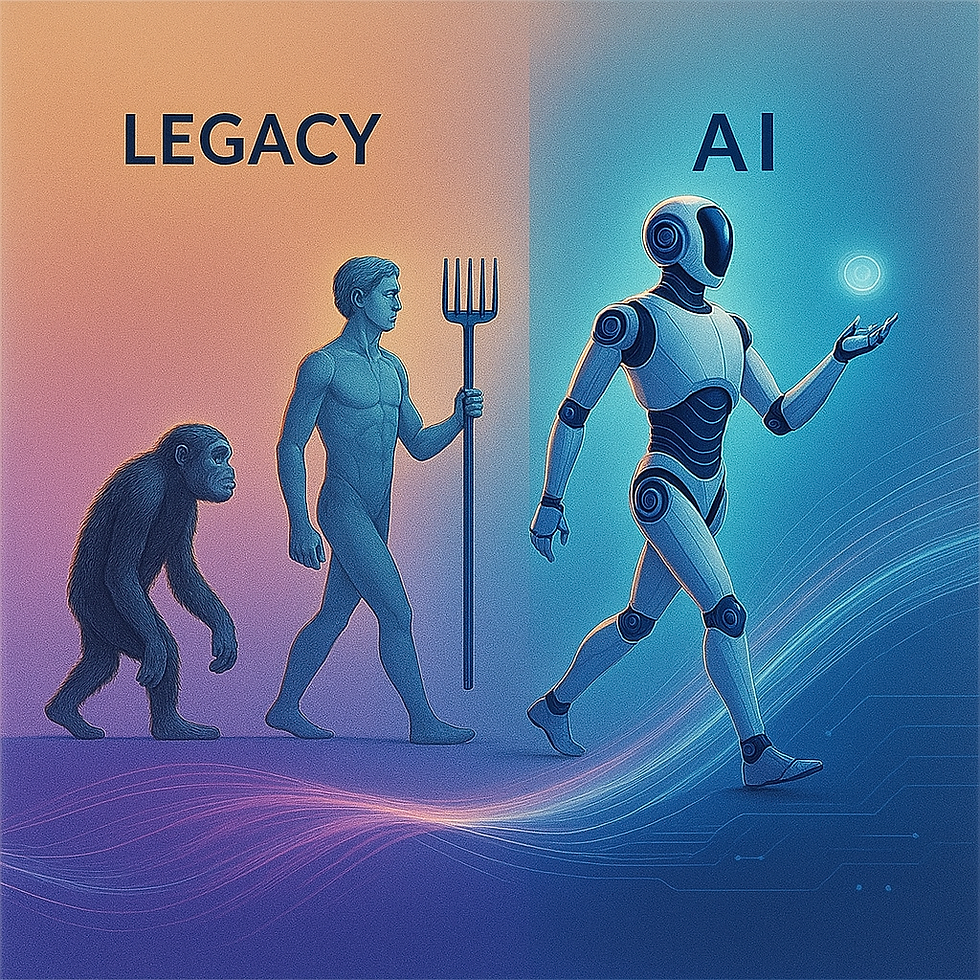
What I believe is the current focus of AI usage is the augmentation of how we do things, making them faster, require less people or completing large tasks that previously seemed unachievable. I see this more as the next move from blacksmiths to factories, where production can increase, it requires fewer people to achieve and can complete larger tasks.
However, the adoption of AI relies on the trust and understanding of the users. With 2 sides to the use of it, there is the trust that consumers need in AI for their products and services to utilise it, and the trust and understanding of the users to upskill to great new services and products. This is aligned with those who upskilled to use machines compared to those who didn’t, as such, they didn’t lose their job but evolved. More on this can be found in Episode 3.
The Future of AI

While the future of AI is ever changing, the direction of travel is becoming more and more clear. For AI to continue to grow and be more usable, we need to improve trust in various industries and public opinion. This has led to a branch of AI called Explainable AI, which focuses on AI transparency and on understanding why decisions have been made by an AI. Stay tuned for more of this in Episode 3!
Another aspect of AI advancement is called Agentic AI, which is a collection of AI Agents that can work together to complete more complex tasks that the individual agents can’t complete themselves and will be covered in Episode 4 of this series. And is a stepping stone to the creation of an Artificial General Intelligence.



Comments