Unlocking the Value of AI for Your Business Series: Ep 4 - AI Agents and the Rise of Agentic AI


For a while now, organisations have been trying to modernise their data and AI capabilities, yet many either don’t know where to start or still feel stuck in a cycle of pilots, POCs and incremental improvements. As someone who has spent my career looking at what AI can do, helping improve the understanding without buzzwords, and guiding enterprises through transformations, I’ve seen the same patterns better models, improved speed of data pipelines, and moving to modern platforms. However, there is still a bottleneck in how much a human can do with their time.
That’s why the shift toward AI agents and Agentic AI feels different. It’s not just another technology wave. It’s a structural change in how work gets done. Improving efficiency within teams to free up the most valuable resources of your team's, time and their creativity.
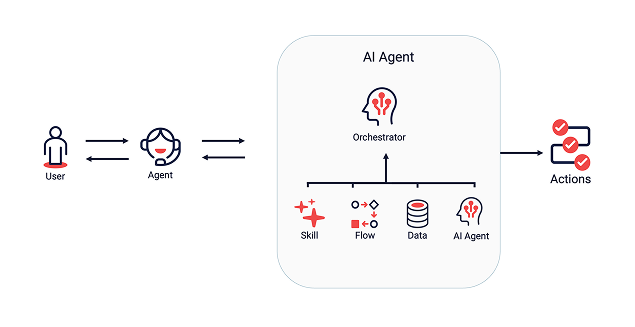
What We Mean by AI Agents
The true definition is “AI agents are autonomous systems designed to perceive their environment, make decisions, and take actions to achieve specific goals.”
But what does that really mean? AI agents are systems that don’t just generate outputs, they act based on the information they have access to, just like we do. Now we are a way off an Artificial General Intelligence that can react to any situation like a human, but within a controlled, specific task, that is what an AI Agent is trying to do.
So, how do AI agents work
AI Agents can be used to automate repetitive processes, integrate with other systems through APIs or Model Context Protocols (MCPs), which you can think of like a USB for AI agents, allowing them to interpret goals, break them into tasks, make decisions, Learn from feedback and operate either autonomously or semi-autonomously to solve or complete tasks.
This moves us beyond the current model of asking Copilot or ChatGPT to help with simple tasks. These agents can utilise LLM tools like Copilot and ChatGPT as part of a larger process to complete complex tasks.

What tasks can we use agents for currently?
Agents are being used across a variety of industries to solve the most time consuming problems, such as:
Healthcare: As a clinical assistant, to retrieve patient details, draft notes or schedule appointments.
HR: Writing job postings, scheduling interviews and generating onboarding materials.
Manufacturing: estimate equipment repair needs from images, optimise delivery routes, detect product defects
And much, much more.
Going forward, the organisations that will succeed aren’t the ones with the most advanced models. They’re the ones that understand how to embed agents into real processes, with guardrails, governance, and clarity of purpose. Allowing that all important resource TIME to be returned to their teams, unlocking the opportunity for creativity and innovation.

Agentic AI: The Next Evolution
Agentic AI takes this concept further. It’s not just an agent performing tasks, it’s an ecosystem of agents collaborating, reasoning and working together to complete complex tasks.
Agentic AI systems don’t just complete a single type of task they coordinate multiple agents with different roles, update workflows dynamically, revaluate their performance to make improvements. This is done by not just linking into a set of APIs or tools like a single agent, but instead with entire enterprise systems securely, and it needs clear guidelines and governance, just like if you spin up a new team in your business.
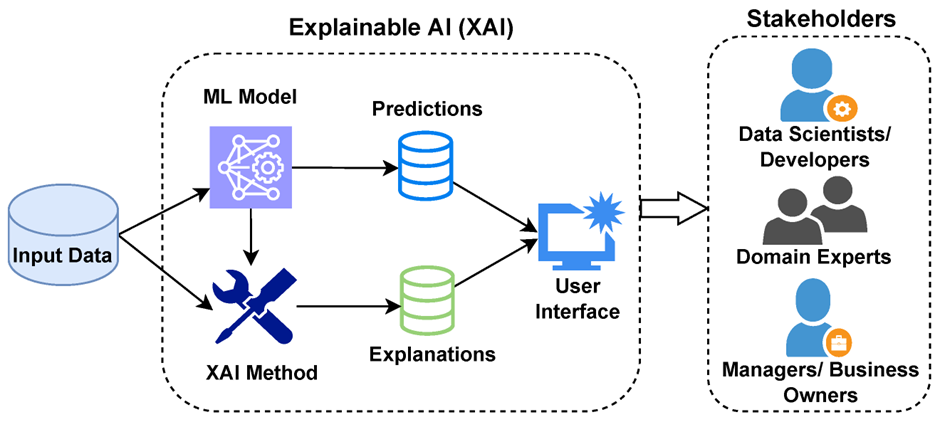
This is where work I’ve done on regulated industry AI safety, platform governance, and organisational capability becomes essential. Agentic AI isn’t plug and play, and something that someone who dabbles in Copilot or ChatGPT will be able to implement. It requires: a clear understanding of what these systems can and can’t interact with, who is responsible for its actions, and they should be managed and treated like a member of the team or team in themselves. This starts with ensuring any Agentic system is designed with a clear architectural understanding of the system, monitoring in place to ensure decisions and actions are understood and appropriate and transparency throughout the entire lifecycle of the system. Without these, Agentic AI becomes a risk. With them, it becomes a force to propel your business.
Why This Matters Now
There are 3 factors in play that make Agentic AI inevitable:
1. The explosion of enterprise complexity
Teams are drowning in tools, data, and processes. Agents can orchestrate this complexity in a much faster way than humans are able to giving back that time resource.
2. The shift from AI as a feature to AI as a collaborator
We’re moving from augmentation to delegation. This changes job design, workflows, and organisational structure.
3. The maturity of the ecosystem
We now have:
Foundation models capable of reasoning
Frameworks like LangChain, MCP, and agent orchestration platforms
Cloud-native architectures that support secure autonomy
Governance patterns that keep humans in control
This is the moment where the technology, the tooling, and the organisational readiness finally align for those businesses that take the chance.
How do we utilise this and start Architecting for Autonomy
While at Cloud Formations, I’ve helped organisations move from aspiration to adoption. The biggest lesson is simple: Agentic AI succeeds when architecture, governance, and capability uplift move together.
In practice, that means designing agent ecosystems that are modular, observable, and governed so that they can be easily understood by not only users but also auditable if needed. Increase the understanding of your teams so they can get the most out of the agents, and they feel comfortable using them. Starting off with safe sandboxes for experimentation and testing. Ensure your teams can work cross functionally, as these systems are most effective when linked to multiple areas of the business, streamlining the full process, not just bits and pieces. Finally, translating complexity into clear, executive ready narratives, if you're trying to get teams to use this or executives to buy into it your need to be clear in what and how these systems are doing.
Agentic AI isn’t just a technical challenge. It’s an organisational one, and that’s where the real transformation happens.

What’s Next: From Agents to Autonomous Enterprises
We’re heading toward organisations where:
Routine work is delegated to agents
Humans focus on judgment, creativity, and strategy
Systems self-optimise
Governance is continuous and embedded
AI becomes a core organisational capability, not a bolt-on
This isn’t science fiction. It’s already emerging in forward-thinking enterprises.
The question isn’t “Will we adopt Agentic AI?”
It’s “How quickly can we build the literacy, architecture, and governance to adopt it safely and effectively?”
For leaders, architects, and practitioners, this is the moment to shape the future, not react to it.


Comments